

Best Luxury Business Card Styles for Small Business Owners in Canada
Are you a small business owner in the highly competitive professional landscape of Canada? Then, you must be looking for some ways to stand out in the crowd of your competitors. With high-quality materials, elegant finishes, and thoughtful design, luxury business cards make a lasting impression and mark your position in the industry.
Depending on your brand, budget and ways of communicating with potential clients, you can choose any textured paper or metal design. The premium options go beyond the typical card-swapping exchange of contacts, allowing them to be a small brand interaction. But high cost does not equal quality. The best card should be the one that is right for your business, communicates clearly and goes beyond places like a wallet.
Why Are Premium Business Cards Different Than Ordinary Ones?
If you are wondering about the difference between high-end and ordinary business cards, the answer is smiles. The distinction lies in the intricacies that people notice before they read your name on the card.
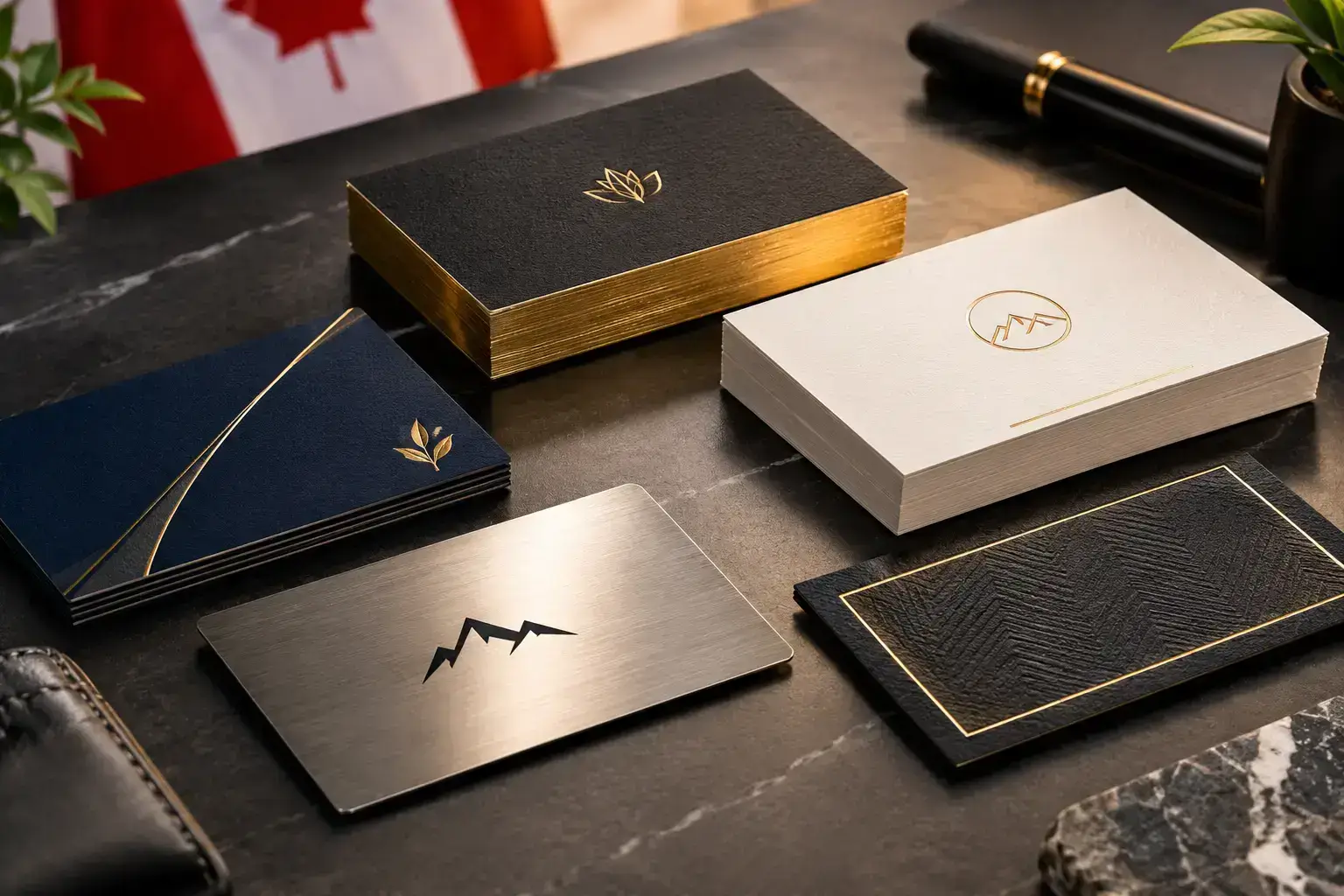
A card can be unique by using heavier cardstock, smoother edges, raised lettering, foil accents and textured surfaces. This is exactly what converts a normal card into a luxurious one. There are some features that should be taken into consideration when small business owners are going for luxury business cards Canada.
Materials
- Thick card stock, cotton paper, recycled paper or metal.
Finish
- Matte, Gloss, Soft Touch, Embossed, or Foil Stamped.
Design
- Organized contact information, even distribution, and readable text.
Durability
- A surface which is able to resist wear and tear from normal use.
The defining quality of a high-end card is that it reflects services without making it hard to read.
What Types of Luxurious Card Styles Are Best for Various Small Canadian Businesses?
Each business has different requirements, and no single design of a card exists that fits all. The key is choosing a style that fits your customers, workday, and printing budget.
- Thick Card Stock for Normal Business Networking
Ideal for consultants, accountants, real estate agents and contractors.
Denser card stock feels good without demanding any extra finish. Matte surfaces allow you to read text, and a clean, two-sided layout provides space for text and a logo as well as contact details.
Small business owners seeking business cards with a premium feel can take a sensible start by opting for this one. You can upgrade paper quality before paying for decorative features.
- Soft-Touch Cards for Refined Feel
Best choice for beauty salon staff, wedding planners and boutique owners.
Soft-touch coatings produce a smooth, velvety surface on luxurious business cards. It can be combined with basic lettering and one colour for a sophisticated look. It suits brands that offer personal attention or premium services.
- For a Bold Introduction, Use Metal Cards
A remarkable choice for luxury property agents, high-end consultants and top-tier service providers.
Metal business cards are a unique and appealing option compared to luxury paper business cards. Stainless steel or other metal finishes can add a nice touch and make a great impression, but they tend to be more expensive and might not be as convenient as giving them to a large group.
Utilize them sparingly, and for specific instances of introduction. Before ordering, confirm the weight, edge finish, legibility, and any digital contact compatibility.
- Foil and Raised Details for Visual Impact
Perfect for designers, jewellery makers, and creative studios.
A logo or business name can be given prominent emphasis on cards with the use of gold, silver, or coloured foil. The texture can be added with raised details, but too many effects may make the design overpowering. It is better to select one characteristic to look at.
- Using Textured and Recycled Paper for Character
Handmade stores, photographers and brands that want to be eco-friendly can opt for this option.
Linen, cotton and recycled paper have a different feel than glossy stock. They can have a natural look even for luxury business cards, which is suitable for companies that appreciate handmade products. Make sure that any fine text is easy to read on the surface you are using.
How Can Small Businesses Set a Reasonable Luxury Card Print Budget?
For businesses that are working on a small scale, when opting for business cards with luxury touches, they need to determine a budget beyond the advertised price. The final price may vary depending on quantity, finish, design work, delivery and taxes.
| Budget level | Suitable choice | Spending approach |
| Lower | Premium cardstock | Upgrade thickness or choose matte finishing |
| Mid-range | Soft-touch or textured stock | Add one special feature |
| Higher | Foil, raised details or metal | Reserve for important contacts |
Canadian supplier prices will differ according to quantity and finish. For instance, some business card manufacturers offer 100 cards, which range anywhere from about $26.99 CAD, and speciality cards begin at $56.99 CAD. These are indicative prices and not definitive.
A good idea here is that if your branding or contact information changes, try ordering a small batch first. If hundreds of cards need to be replaced, a lower price per card won’t be beneficial.
What Do You Need to Review Before You Approve the Design?
Before sending your artwork to print, review the card as if you were receiving it for the first time.
- Ease of reading. Is your name, business and phone number easy to find?
- Contact details. Are your website, e-mail and social media links accurate?
- Finishing. Is there any logo visible on the selected texture or foil?
- Printed proof. Do colours, spacing, and margins appear correct at actual size?
- Reordering. Will the printer store your design for future orders?
For small business owners, another way to stand out is to consider your overall brand, too. When your cards are matched with letterhead printing Canada, it can help to provide a cohesive appearance throughout your quotes, invoices, proposals, and client correspondence.
FAQs
Do premium cards make sense for a small business?
They can be valuable when you meet with clients on a regular basis. Pick a finish that is in line with your brand and not just to look luxurious.
What size are business cards in Canada?
The size commonly used in Canada is 3.5 × 2 inches. It can fit most standard size of cardholders and wallets and is a handy option for day-to-day networking.
Is it possible to print a small quantity of cards without excessive expense?
Yes. Compare smaller quantities and basic premium finishes before ordering in bulk. Include any set-up fees or delivery fees in the total, and determine if they vary.
Is it right to use metal cards in all industries?
No. They work well with certain high-end brands and are ideal for new arrivals and appointments, but paper cards tend to be more functional for regular handouts and reminders.
Should I put a QR code on my card?
You can use a QR code to send people to your portfolio, booking page or contact page. Test it on a printed sample, and make the code large enough to be easily scanned.
Go Beyond Being Ordinary with High-End Business Cards! The right business cards are those that clearly represent your business, are fitting for your customers and are budget-friendly without compromising readability. For small businesses, use high-quality cardstock and, if appropriate, a texture, foil, or metal that complements your brand. First, use comparison quotes, then take a physical look at a sample and verify all the details before printing. With a little creativity in the design, a small Canadian business can appear to be well-established with their business cards without overspending.

Ethan McAllister is a branding enthusiast and print specialist at LuxeBusinessCards.ca, a platform where creativity blends with craftsmanship. He closely follows design trends across Toronto, Vancouver, and other thriving Canadian markets, helping professionals strengthen their brand identity through refined stationery. Through his blogs, Ethan shares expert advice on choosing the right finishes, textures, and layouts so readers can confidently invest in business cards that leave a lasting impression.