

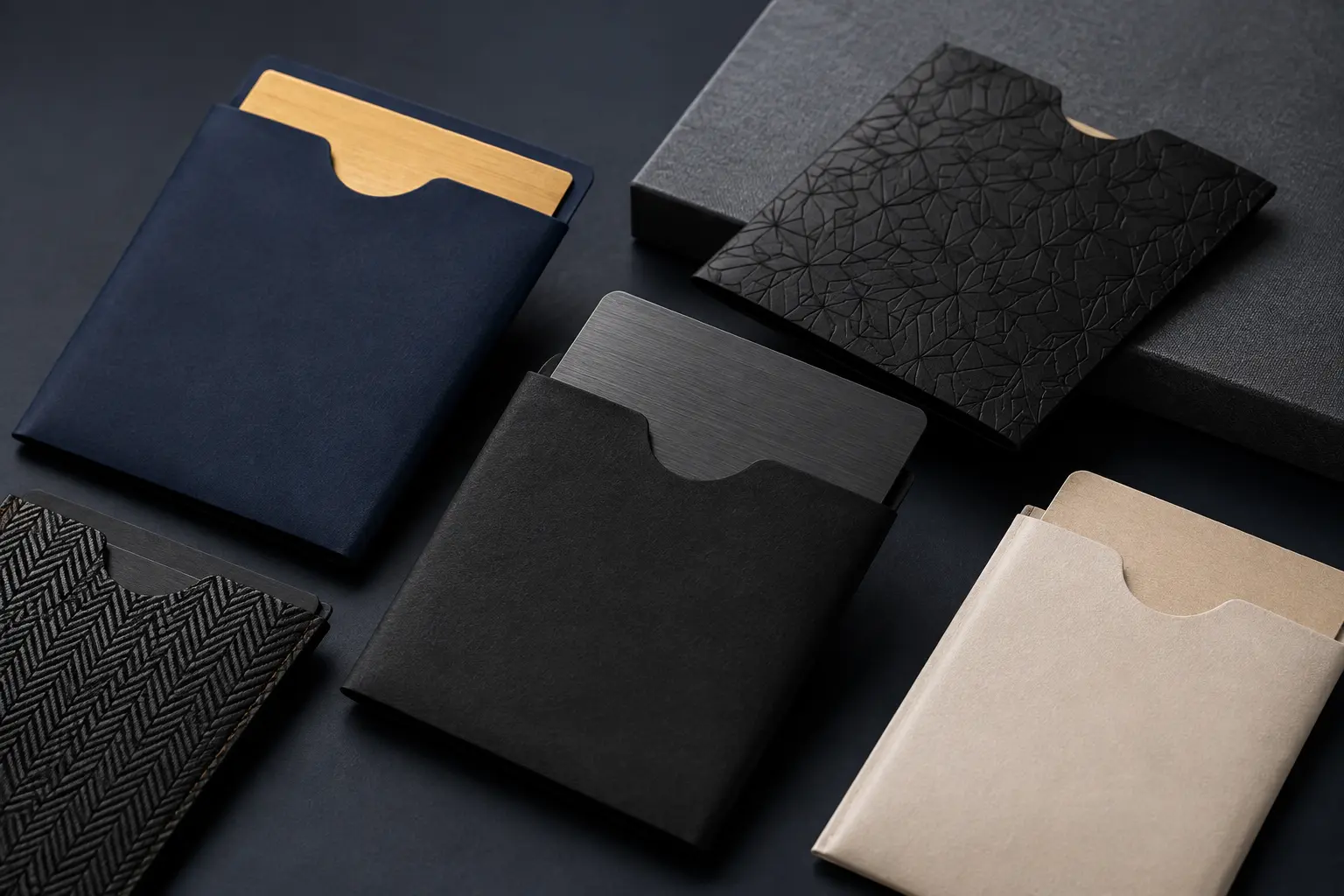
Custom Business Card Sleeves That Elevate Your Brand Image
A business card may look small, but the moment it changes hands, it can become part of your brand experience. Imagine you are handing over that card in a sleeve that is designed around your colors, logo, and personality. Suddenly, an ordinary networking exchange can feel considered and professional.
This small extra layer can protect your business card, create anticipation, and make your company easy to remember. In a market where digital introductions happen constantly, physical details can also carry surprising weight. Adobe’s research in 2025 found that 62% of consumers were more likely to use a business or service after receiving a physical card, but 70% said that exchanging cards felt personal.
Why Custom Card Sleeves Matter For Brand Perception
A sleeve is far more than packaging, but it is an extension of the visual identity that your customer has already seen on your website, stationery, storefront, or signage. If those details work together, the recipient will get a consistent impression before they even read the card.
● Turn A Simple Card Into An Experience
When a recipient pulls a business card from a branded sleeve, it creates a small moment of discovery that matters. You can think about a luxury property consultant who uses a charcoal sleeve with subtle gold detailing. The card inside it might be beautifully printed, but the sleeve will set the expectation first: premium service, attention to detail and confidence.
Research found that high-quality and novel business cards can positively influence perceptions of a salesperson’s efficacy and trustworthiness, with some of that perception transferring to the company itself.
● Reinforce Visual Consistency
Strong brands cannot maintain visual consistency accidentally. They usually follow a recognisable system for colours, spacing, typography, imagery, and materials. You should follow the same principle for your business card sleeve. If your website is using deep blue and clean typography, suddenly introducing a bright red sleeve can weaken that visual connection. A coordinated design will help you to make it feel intentional.
The same thinking applies across printed materials. A company that is investing in high end business cards should not treat the protective sleeve as an afterthought, and both pieces should feel as though they belong to the same brand family.
● Communicate Quality Without Saying Much
Customers often make judgments from physical details. The elements, including paper thickness, finishing, print sharpness, colour accuracy, and even how something feels in the hand, can influence its perception. When you produce a sleeve carefully, it can quietly communicate that your business pays attention. It should not need to have oversized graphics or excessive decoration. Sometimes restrained design says more.
It is reported in a survey of 2,000 people that 63% considered a quality business card that is helpful for making a good impression and 60% were more likely to use a business with a unique or memorable card.
How To Design A Sleeve That Feels Like Your Brand
Creating good design of business cards sleeves in Canada often begins with restraint. Your goal should not be to cover every available surface with information, but to create a polished frame around the card inside. A useful sleeve should look attractive on its own and also make the enclosed card feel even more valuable.
1. Start With Your Existing Brand Identity
You should start using your established logo, typography, brand colours, and design language instead of creating an unrelated mini-brand.
For example, a financial consultancy may use a clean ivory sleeve with a dark navy logo, but a creative studio might experiment with unusual colour blocking or a distinctive pattern. Your design should reflect the business instead of merely following a printing trend.
2. Choose Materials According To Positioning
The choice of material can affect both appearance and handling. Smooth coated stock can create a crisp corporate feel, while textured paper can make a boutique or artisanal brand feel warmer.
You should consider the environment, too. A sleeve that is intended for conferences may need to withstand frequent handling. One used for client gifts can prioritise a more luxurious finish.
3. Make The Opening Part Of The Design
You should choose a sleeve that is easy to open. This may sound obvious, yet awkward packaging can quickly undermine an otherwise premium presentation.
A clean side opening, precise dimensions, and enough tolerance for the card will make the customer experience feel effortless. The recipient should focus on noticing the design, not struggling with it.
4. Add A Useful Digital Bridge
You can use a QR code to connect the physical experience with your online presence. It may lead to a portfolio, digital contact card, appointment page, product catalogue, or company website.
Research found that business cards featuring QR codes have increased contact likelihood by 69% in its survey research. You should keep the code secondary, though it should support the brand experience instead of dominating it.
Where Custom Sleeves Make The Biggest Difference
Every business does not need an elaborate presentation, but certain situations can make a branded sleeve particularly valuable.
● Networking Events And Conferences
Considering a branded sleeve can help your card to stand out after an event where someone may collect dozens of them. Instead of your card becoming another loose rectangle in a pocket or bag, your card will arrive as a complete presentation. This physical distinction can help you reinforce the conversation you had.
Presentation is part of the sales experience for consultants, real estate professionals, designers, agencies, architects, and other service businesses just like custom letterheads in Canada. A sleeve can give you another opportunity to demonstrate that your work is organised and considered before the formal relationship even begins.
● Premium Gifts And Welcome Packages
If your business card is included with a gift, proposal, sample, or welcome package, the sleeve can connect all those elements visually. This is especially effective for those brands that sell premium services or products where packaging can influence perceived value.
Frequently Asked Questions
1. What size should I choose to create a business card sleeve?
You should choose a slightly larger sleeve than the finished card, which allows it to slide in and out comfortably without becoming loose. Exact dimensions of the sleeve depend on the card’s thickness, paper stock, and whether the sleeve has folds or an adhesive closure.
2. Which printing finish looks most professional?
There is no single best finish for every brand. Embossing and foil will be perfect for premium businesses, and clean matte printing often works beautifully for corporate identities. The right choice of the finish depends on your positioning, existing stationery, audience, and overall design system.
3. How many custom sleeves should I order for my small business?
You should start with your actual networking and client-contact volume instead of automatically ordering a huge quantity. When a smaller first run, it allows you to test the fit, design, material, and customer response. Once you know the format works, larger quantities can generally make more sense.
Final Thoughts
Custom business card sleeves can give a brand another opportunity to make a thoughtful impression before the recipient even begins a conversation. They will help you protect the card, reinforce visual identity, and turn an ordinary exchange into a more polished experience. The strongest designs will remain consistent, practical, and restrained instead of overloading with decoration. If your business wants every physical touchpoint to feel intentional, a custom sleeve is a small investment worth considering.

Ethan McAllister is a branding enthusiast and print specialist at LuxeBusinessCards.ca, a platform where creativity blends with craftsmanship. He closely follows design trends across Toronto, Vancouver, and other thriving Canadian markets, helping professionals strengthen their brand identity through refined stationery. Through his blogs, Ethan shares expert advice on choosing the right finishes, textures, and layouts so readers can confidently invest in business cards that leave a lasting impression.